Finding local-first free wedges inside paid extensions
A public recap of Chrome extension replica research for indie builders.
Today's automation run stayed focused on mid-sized paid Chrome extensions: products with clear commercial signals, enough user demand, and visible gaps in growth, reviews, or product complexity.
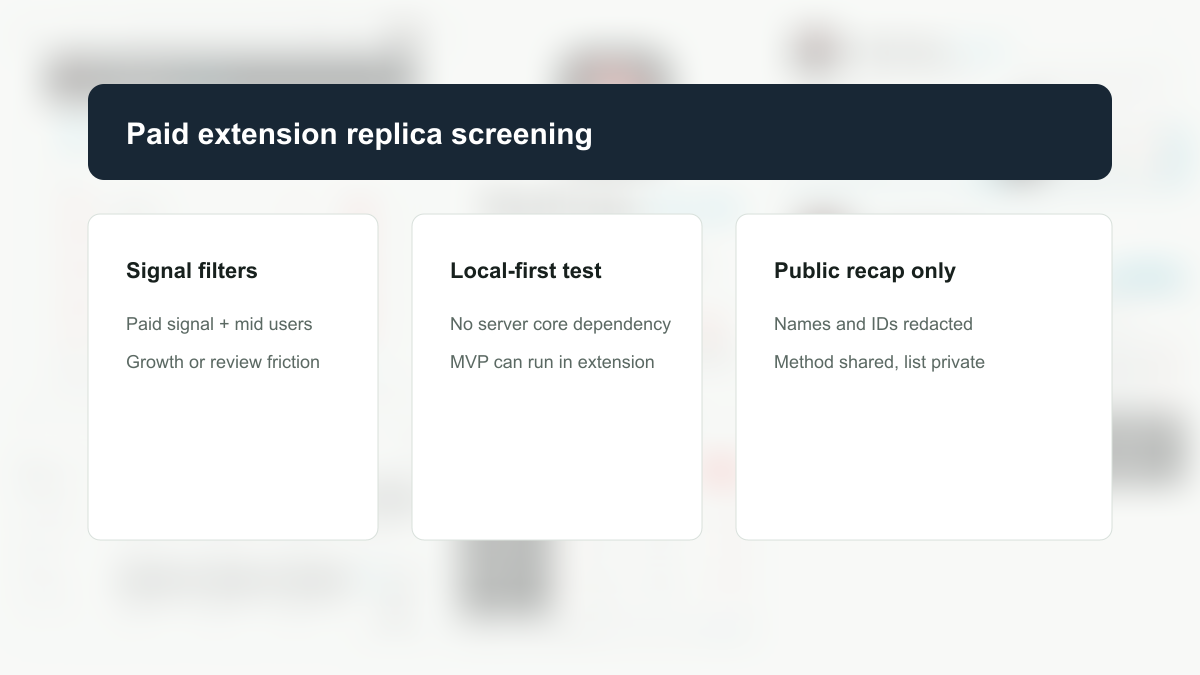
The main question was not whether we could build a larger feature set. It was whether one frequent job could become local, free, and useful immediately after installation. If the incumbent's value depends on servers, account data, cloud AI, or risky automation, it is a weaker first product for an indie builder.
The better wedge is browser-side work: local rules, page cleanup, request debugging, text export, and small workflow helpers. The free version should complete the core job first. Sync, templates, batch actions, and advanced presets can become the later Pro layer after demand is proven.
The exact opportunity list remains internal. This public recap shares the method and a redacted workflow, not a directly copyable competitor map.