Finding Indie Opportunities in Local-First Paid Chrome Extensions
A public recap of screening paid Chrome extension demand through paid signals, user scale, and extension-side feasibility.
Today’s research focused on local-first extension capabilities: page overlays, distraction blocking, and new tab productivity. These products share one useful trait: the core value can work before a complex backend exists.
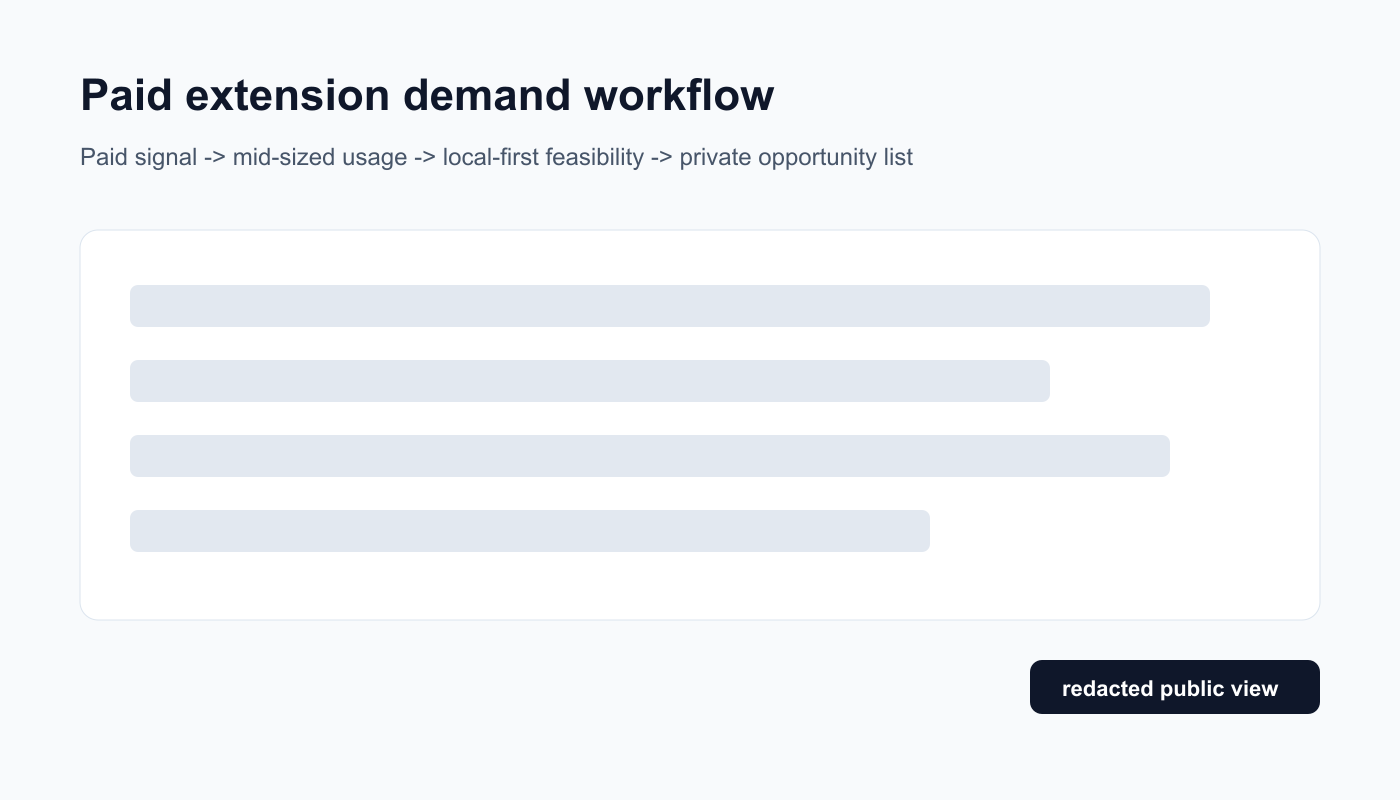
The screening order was paid signal first, then mid-sized user base, recent updates, and whether the core workflow can be built with Manifest V3, content scripts, new tab pages, and browser storage. AI answers, cloud sync, and accounts can become later upgrades, but they should not be the starting point for a free MVP.
This run hit terminal DNS limits for the internal API, CRX download source, and payment backend. The public recap therefore documents method and boundaries only. The internal opportunity table, competitor links, extension IDs, and directly copyable product details stay private.