Finding local utility Chrome extension opportunities from paid signals
A daily paid-extension research recap on using low permissions, local workflows, and review pain when the mid-user growth pool is empty.
Today’s research started with confirmed paid signals and recent growth. Under the strict filter of mid-sized user count, confirmed paid status, seven-day growth, and low-risk categories, the result pool was empty. That is useful information: the fastest paid-growth areas often lean into platform-sensitive behaviour, while the more practical opportunities for an independent developer may sit outside the top growth rows.
The stronger filter was local utility fit: a repeated task, clear paid evidence, review pain around paywalls or reliability, and a core workflow that can run with a popup, content script, Chrome APIs, and local storage.
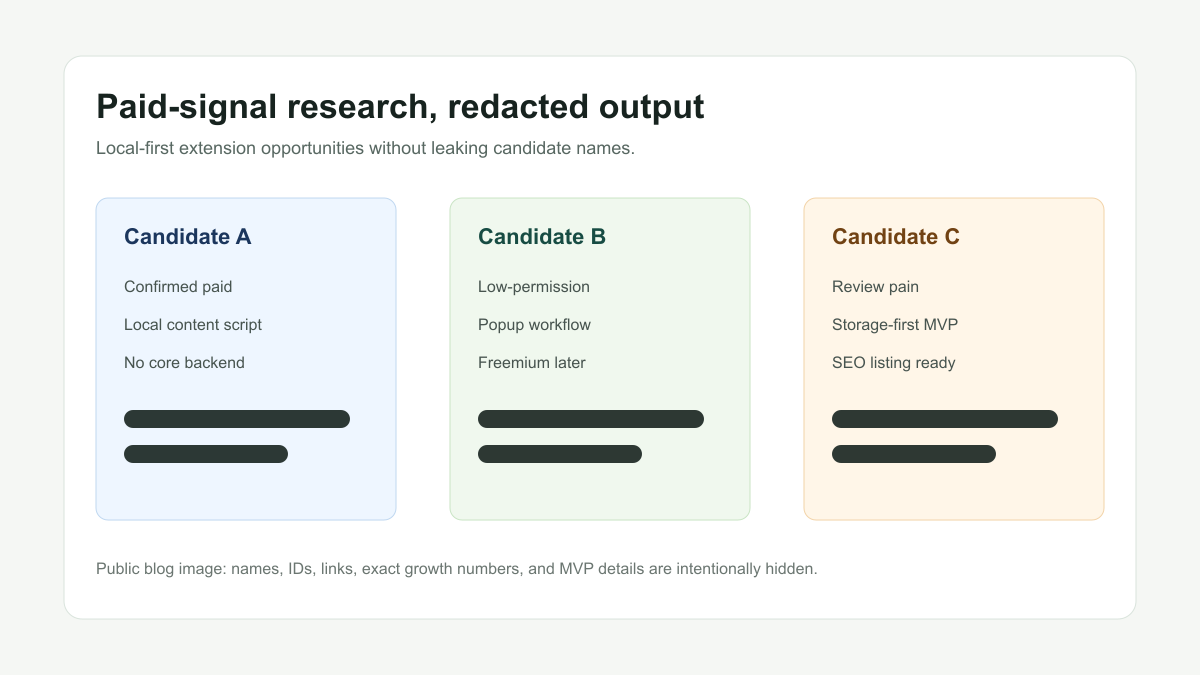
This public recap does not disclose the candidate table, competitor links, extension IDs, exact growth numbers, or complete MVP details. The internal report keeps the full evidence chain: payment platform, filtering lens, review pain, source download analysis, payment product creation, WXT builds, localization, store assets, and code review.
The repeatable lesson is that a free-first counter-position should not start by copying every competitor feature. It should make one clear action work completely for free, then reserve scale limits, team features, backup/restore, and advanced templates for a later Pro mode. A low-permission product that works immediately without account pressure is often a better cold-start wedge.