Finding a paid extension opportunity in design inspection workflows
A daily paid-extension research recap on using paid signals, review pain, search gaps and client-side feasibility when the strict growth pool is empty.
Finding a Paid Extension Opportunity in Design Inspection Workflows: June 2, 2026
Today’s strict filter started with confirmed paid signals, mid-sized user count, and recent 7-day growth. That pool was empty, so the better move was not to force the data. I switched to a layered screen: paid proof, enough users, recent review evidence, search gap, and whether the core job can be done inside the browser.
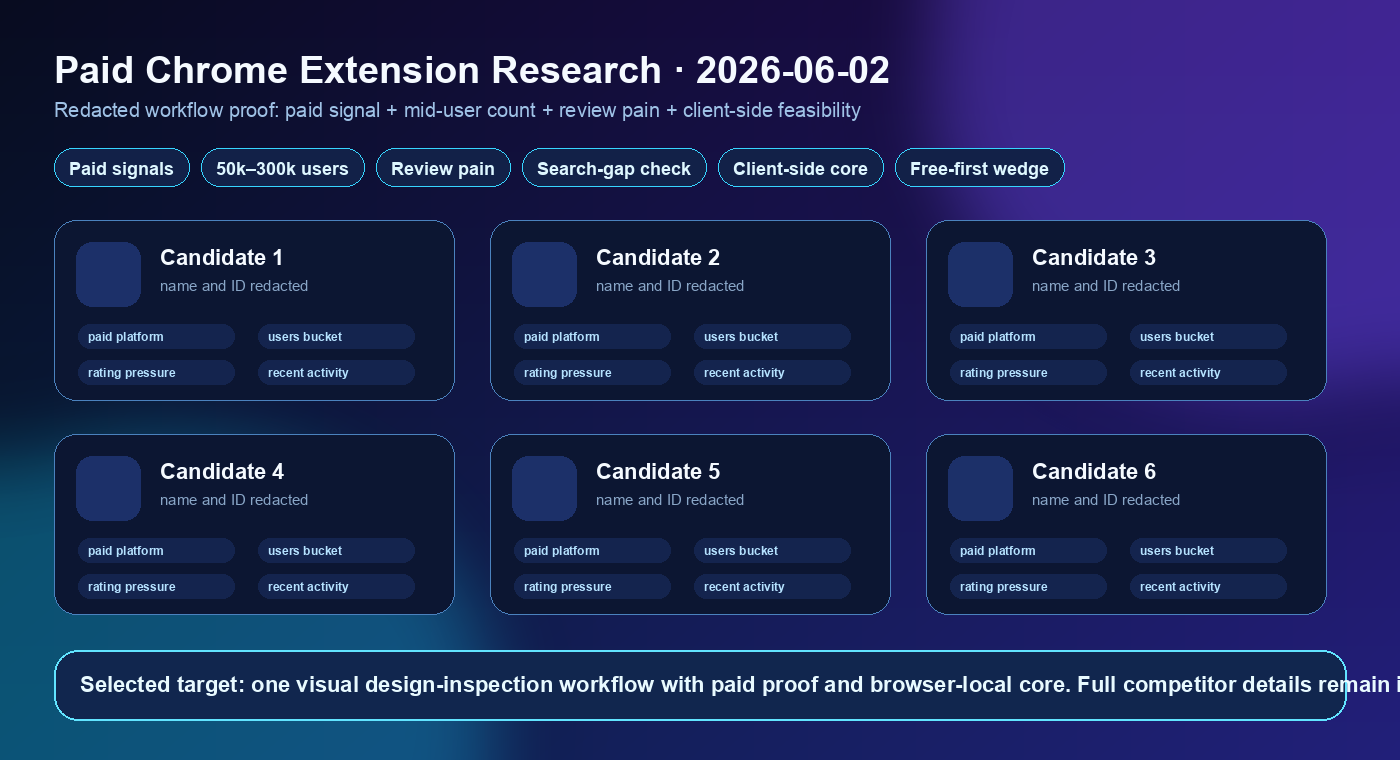
The strongest direction came from a web design inspection workflow. Users install this kind of extension because it reduces friction in design QA, frontend debugging, element screenshots, CSS checks, and handoff conversations.
This public recap intentionally omits the competitor name, extension ID, full candidate table, and replica details. The pattern is what matters:
- The user persona is professional: designers, frontend engineers, and QA testers.
- Reviews contain both willingness-to-pay signals and paywall or pricing pressure.
- The core actions are browser-local: measuring, CSS inspection, color and asset extraction, screenshots, and basic SEO checks.
- The core search term is not fully locked by a dense field of mature competitors.
The free-first wedge is clear: make measuring, inspecting, copying and local analysis stable, low-permission, and account-free. Once users trust the workflow, higher limits, batch exports, responsive reports, and team handoff features become more credible Pro upgrades.
The internal report keeps the full evidence chain: candidate list, paid platform signals, user count, review pain, search results, source download analysis, payment product setup, WXT build, localization, store copy, asset dimensions, and code review.